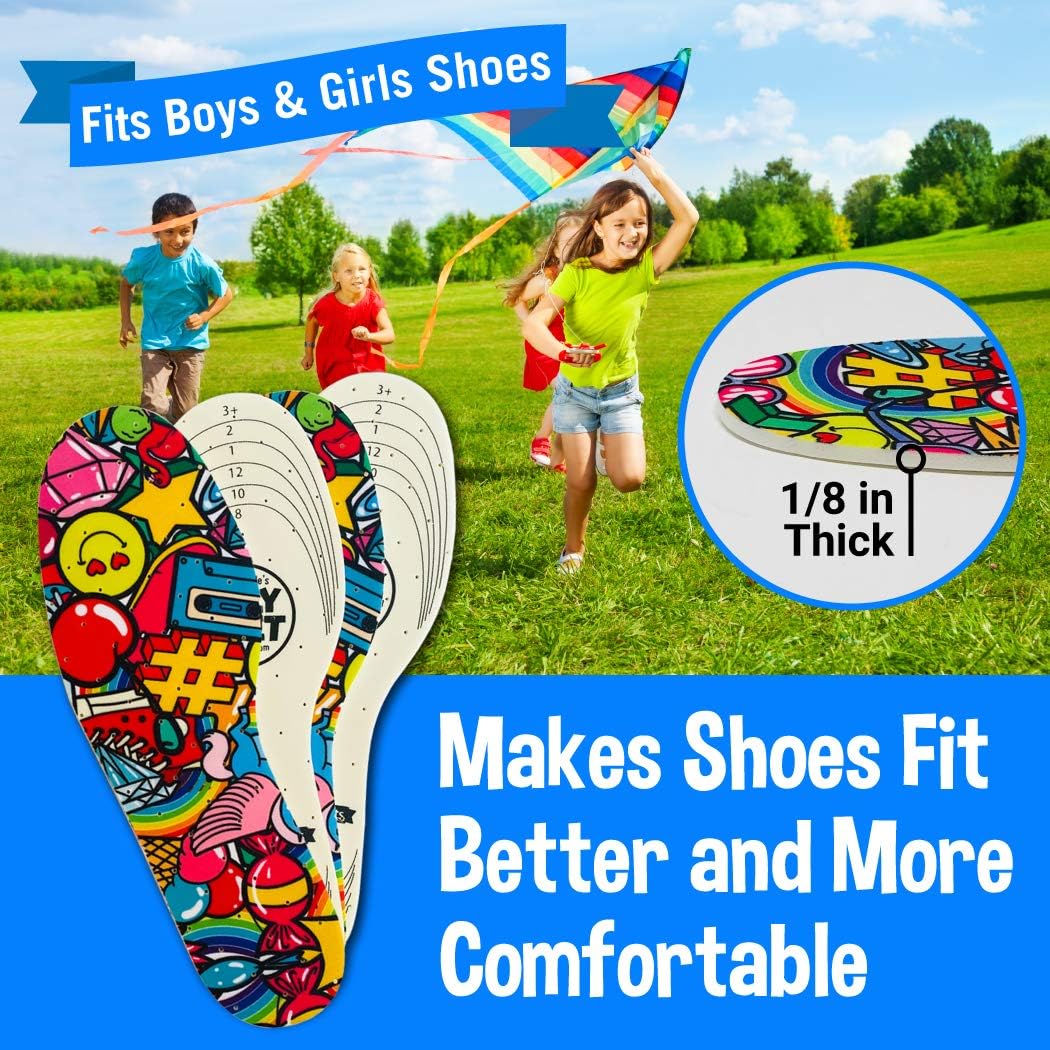
The insoles suitable for children are natural leather, preferably suede leather, which has a certain friction and prevents the feet from slipping. Cotton insoles are also very suitable for children. They have a good affinity with the feet, are economical, environmentally friendly and hygienic.
Thick and soft sponge pads feel very comfortable, but they are not suitable for children. On the one hand, soft pads will weaken the feeling of the feet touching the ground, and cannot train children’s ability to grip the ground with their soles, that is, the ability to master balance. They will also prevent the nerves in the soles of the feet from getting the proper stimulation, hindering the development of the nerves in the soles of the feet. According to research by scientists in the United States, Hong Kong and Japan, modern children have poor development of the nerves in the soles of the feet and are prone to falling. This is closely related to wearing travel shoes for a long time, because the insoles of travel shoes are mostly soft. In addition, most of these insoles have poor air permeability and sweat absorption, and are not suitable for children to wear. Good insoles should be harder in the forefoot and softer in the heel.
Children should not wear medicated insoles with deodorizing properties. Parents must know that “medicine is three-point poison”. Many of these insoles have the function of astringing sweat glands, preventing feet from sweating, affecting normal metabolism, and causing great damage to the body.
Parents should be cautious when using nano antibacterial and deodorizing shoes and insoles on the market. According to a research report from the University of Rochester in New York, carbon nanoparticles with a diameter of 35 nanometers can quickly appear in the area of the brain that processes smell after being inhaled by mice, and continue to accumulate. Researchers believe that carbon nanoparticles enter the brain together with brain cells that “capture” fragrance. The American Chemical Society also pointed out in a research report that carbon 60 (C60) can cause extensive damage to the brain of fish. This is the first time that researchers have found evidence that nanoparticles may cause toxic side effects to aquatic species. The United Kingdom has also published a report entitled “Nanotechnology – Opportunities and Uncertainties”, which believes that most existing nanotechnology is safe, but the biosafety assessment of nanotechnology is a global issue. Because nanomaterials are very thin and can enter the human body through skin contact, there are no complete research results on whether they react with cells in the body to cause inflammation and lesions. All these show that there are still many uncertainties in the impact of nanomaterials on human health and the environment, so parents should be cautious when buying nano shoes, insoles, and daily necessities for their children.
In fact, children exercise a lot and sweat a lot, so foot odor is inevitable. As long as parents can treat their children’s foot odor correctly, give their children good breathable shoes, and keep their feet and shoes clean, it will not affect their healthy growth.
There is a misunderstanding in children’s functional shoes and health shoes in my country. The insoles use soft materials for the forefoot, which are very comfortable, but they hinder the “communication” between the soles of children’s feet and the ground, affecting the feedback, stimulation and normal development of the plantar nerves and the brain. It is also an important reason why modern children are prone to falling and spraining their feet and have unclear feelings about the road surface, which will make the exploration function of the feet disappear.
Then, when choosing healthy functional insoles, the following four points should be followed:
(1) The correct bending and pressure design of the forefoot can assist the forefoot in gripping the ground and promote brain development;
(2) The correct bending and pressure at 1/3 of the forefoot, and high elastic recovery help energy return;
(3) The arch design should provide good protection and wrapping for the foot, and cooperate with ankle protection;
(4) The heel design should pay attention to high cushioning and high shock absorption to prevent sports injuries and protect the brain.